Avoiding the Intervention Merry-Go-Round: Using Implementation Science to Make SEND Interventions Stick
Imogen Barber |
July 7, 2026
Share to
By Katie Hickin, Real Training’s MEd Academic and Programme Lead and former SENCO.
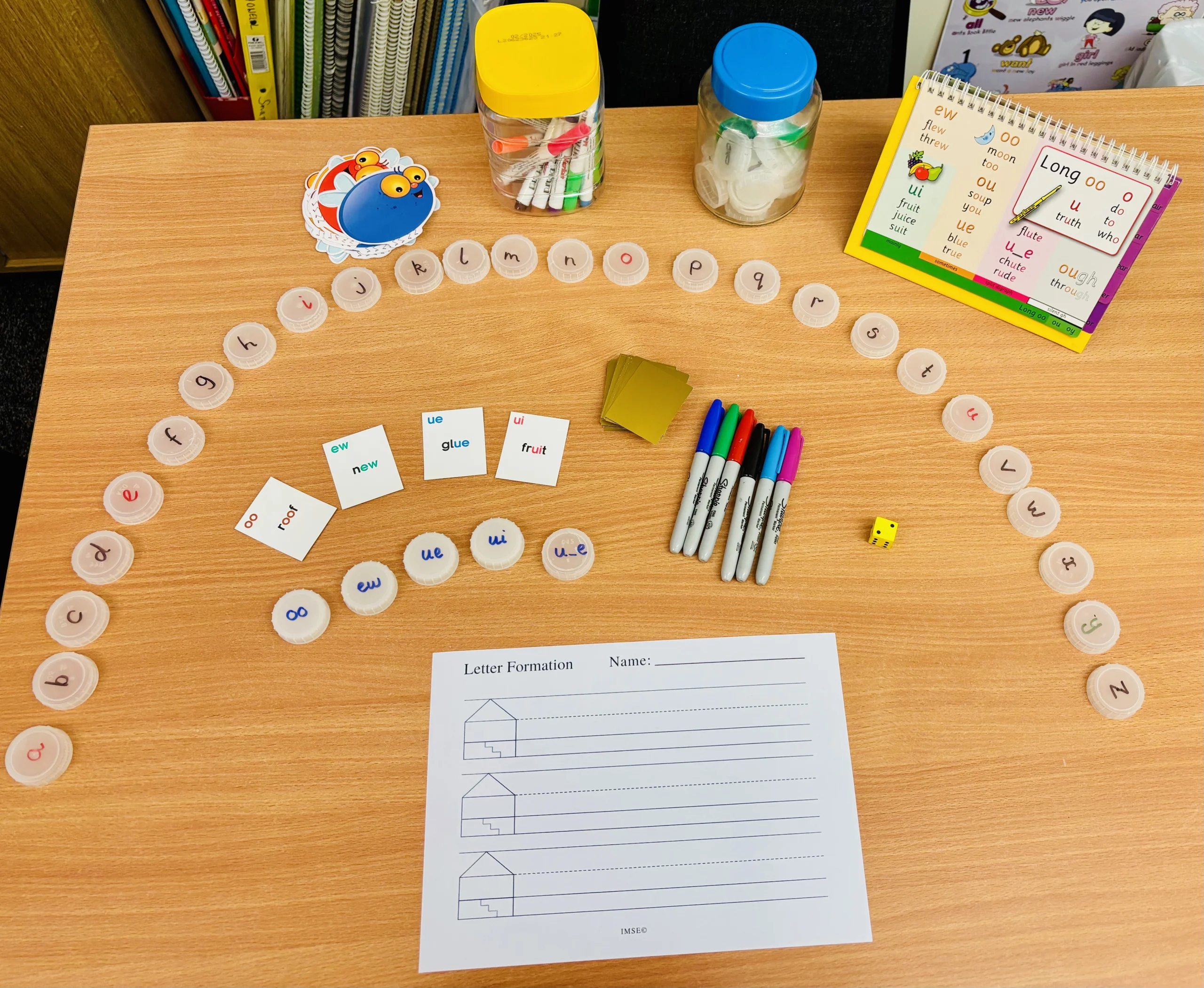
Have you looked in your literacy/maths cupboards lately? How high are the boxes of interventions old and new stacked? And that’s before we factor in a spiralling collection of educational apps and websites…
The sheer volume of available interventions can be overwhelming. Equally, it can be both exhausting and frustrating to introduce a new strategy only for it to fizzle out within half a term and be replaced with the next shiny intervention. I know I’ve certainly been there! Sometimes this could be due to factors beyond our control, but let’s focus for a moment on what is.
To break this cycle, we need to recognise that effort must be distributed between selecting an intervention based on its evidence-base, evaluating whether it’s a good match for our current resources and thinking through how it might be effectively rolled out upfront. Staff time and energy is too valuable to be pulled into initiatives that can’t be sustained, or are poorly implemented.
Instead, doing the right thing for SEND pupils means embedding quality-first, inclusive teaching into the fabric of every classroom. What’s essential here is that both universal inclusive teaching strategies and the interventions that supplement them are carefully selected, fully embedded and demonstrably improving outcomes. It’s a priority reflected at a national level; Ofsted’s new Inclusion evaluation area deliberately focuses on evidencing the sustained impact of support for vulnerable learners.
When it comes to interventions, in order to move from a cupboard full of boxes to a culture of sustained impact, we have to change how we roll things out. This is where we can draw upon the concept of Implementation Science. Strip away the academic title, and it’s really just about giving us practical, realistic frameworks to make sure the good ideas we find actually stick in our busy classrooms.
In other words, it’s not just about whatintervention we choose, but how we introduce, support, and sustain it.
The Implementation Gap: Moving from ‘What’ to ‘How’
It is incredibly easy (and tempting) to buy a shiny new intervention package, hand the glossy folder to a teaching assistant, and cross it off our to-do list. The hard part is changing daily classroom habits and school culture to ensure that the intervention actually works (whether it takes place within the classroom, or in small groups/one-to-one sessions outside of it). As the Education Endowment Foundation (EEF) notes in their updated guidance:
“Ultimately, it doesn’t matter how great an educational idea or intervention is in principle; what really matters is how it manifests itself in the day-to-day work of people in schools.” – EEF, A School’s Guide to Implementation
This disconnect is what implementation science calls the “implementation gap.” In light of the SEND reforms and the updated Ofsted inspection framework, bridging this gap has never been more critical. The Schools White Paper released earlier this year places increased focus on mainstream inclusion and whole-staff SEND upskilling. By shifting expertise from the lone SENCO to the wider staff base, the government relies heavily on workforce culture. When we rush a rollout, we ignore the fact that school change is deeply human and that a school’s biggest resource is its staff. Effective implementation must unite people around a shared purpose rather than overwhelming them with new legislative mechanisms.
By utilising implementation science frameworks, you can co-produce a vision with your team. Rather than handing out top-down mandates, this allows you to find the perfect balance between:
Fidelity: Ensuring those non-negotiable, evidence-based “active ingredients” of an intervention are delivered exactly as research intends. This should be measured early and often when implementing new interventions.
Adaptation: Allowing enough structural flexibility so the strategy fits holistically into your specific school context and timetable. Adaptations to interventions are common and can enhance sustainability and effectiveness, provided the “active ingredients” are preserved. (Harn, Parisi & Miller, 2013). This is also your opportunity to ensure that this additional targeted support is closely linked to classroom learning.
Auditing with Intention: The ‘Exploration’ Phase
So, before launching any new SEND initiative, we need to slow down and explore our current reality. Effective implementation must begin with a robust, structured ‘Explore’ phase. An honest, data-driven evaluation of the unique strengths and weaknesses of how pupils with SEND are currently supported in your setting.
Following this structure also aligns with Ofsted preparation. Because the new framework prioritises the “lived reality” of inclusion, inspectors will look at how systematically you identify needs and justify your interventions.
SENCOs need the skills to be able to triangulate quantitative SEND data (achievement data, attendance gaps between those with SEND and their peers, % of pupils with SEND opting into a certain subject etc.) with qualitative feedback from staff, pupils, and parents. This gives you a clear, unassailable baseline to present to senior leadership and inspectors alike.
Crucially, an effective audit must evaluate institutional readiness and staff capacity alongside student metrics. In a previous Whole School SEND blog, I highlighted that a practitioner whose well-being is compromised simply cannot support pupils to the best of their ability. If we add an intensive new intervention onto an already overloaded team, the intervention is structurally compromised from day one. Part of the leading improvement mindset means analysing your setting’s systems and consulting on workload impact before a new initiative begins.
Before committing to a new SEND intervention, ask:
Is this actually a universal offer issue or a targeted support issue? Are we trying to patch a widespread quality-first teaching gap with a targeted intervention, or does this student truly require a distinct, specialised programme?
Do we have the contextual infrastructure? Have we ring-fenced time in the school day for staff to deliver and prepare for this intervention, or are we squeezing it into the margins of an already packed schedule?
What are we stopping? To create the operational capacity for this initiative to succeed, what needs to be reduced or stopped? Whilst impact data is important in making these decisions, do balance that with involving pupil voice so that ‘obvious’ cuts don’t inadvertently strip away any extra-curricular activities that SEND pupils may value most.
The Four Stages of Making it Stick
Implementation science follows a cycle of four clear, sequential phases: Explore, Prepare, Deliver, and Sustain.
Stage 1: Explore (The Audit)
This is your foundational groundwork where you self-evaluate your setting, check the evidence base behind your chosen intervention, and build a rock-solid rationale. This data triangulation is exactly what hooks inspectors and proves your strategic intent. When you are gathering your evidence base, the EEF and Evidence for ESSA are both great for meta-analysis of popular, established interventions. For more niche interventions, a free-to-access, scholarly collaboration network such as ResearchGate or the Whole School SEND database can also be treasure troves of evidence.
But don’t forget about practice-based evidence. Do you know someone at a similar setting who has used this intervention? An honest opinion from a trusted colleague, whilst not a guarantee, can help build a picture of the feasibility and sustainability of the intervention.
Stage 2: Prepare (The Setup)
This is the logistical heavy lifting. Before a single pupil sits down, you communicate with all stakeholders to build buy-in, provide professional development for staff, identify intervention champions and leadership teams, adjust timetables and secure resources (Doyle et al, 2025).
You can’t clear a path without kicking up some dust, so expect hiccups here! This is the stage where the intervention might feel clunky; a colleague has announced they’ve tried it twice and it doesn’t work, timetables clash, and progress might feel slow. The EEF notes that the core behaviour in this stage is to reflect, monitor, and adapt. Whilst monitoring fidelity is crucial, rather than launching a massive, exhausting data trawl immediately, use light-touch approaches like lesson walks or peer coaching to gather internal monitoring data and make small, intelligent adaptations to maximize impact.
This phase will be the biggest test of your communication strategy. When teething problems trigger difficult conversations with parents or staff, rely on well-honed communication skills: take a breath, listen actively, paraphrase their concerns, and keep the scope firmly focused on your shared goal – the learner’s success.
Stage 4: Sustain (Full Implementation)
This is the ultimate destination where you maintain the momentum so good ideas don’t get drowned out over time. The intervention is no longer a “new initiative”; it has successfully become “just the way we do things here.” Your colleagues are confident, your data proves the impact, and you have built a sustainable system.
Sounds great, doesn’t it? But all of this can seem a little abstract if you haven’t gone through the motions of conducting the audit, applying the theory and negotiating the inevitable bumps in the road. I’m a firm believer in learning through practice, which is why our course uses this framework to help you design, implement, evaluate and get external expert feedback on a real-world project in your own setting.
Sustainable Impact Over Quick Fixes
Implementation science tells us that sustainable change takes time, often two to four years to fully embed a major framework shift (EEF, 2024; Fixsen et al., 2005). Breathe a sigh of relief; you don’t have to fix everything by next Tuesday!
So, whether you are looking ahead to your next inspection under the updated Ofsted framework, or simply trying to get the best outcomes for the learners in your care, remember:
The intervention itself is only part of the puzzle – the other pieces are how you lead, support, and monitor its delivery.
Start small and audit deeply – use the principles of implementation science to ensure your foundations are rock solid before scaling up.
Protect your staff’s time – effective implementation cannot happen in the margins of an already overloaded school day.
Change is a process, not an event.
Give yourself and your staff the time to get the how right, and the impact will follow naturally.
Relevant courses
Our Auditing and Leading Improvement course is designed to give SENCOs and Inclusion leads the skills and framework to audit their SEND provision in a structured, methodological way, and identify areas for improvement. It focuses on what it takes to lead the roll-out of new SEND initiatives with a focus on long-term sustainability, pupil independence and TA and teacher agency.
Under the guidance of an experienced tutor, you will apply your new knowledge of Implementation Science to implement an improvement project of your choice in your setting, such as rolling out a new evidence-based intervention, making improvements to your inclusion base, or ensuring teachers have the tools and training to facilitate early intervention as part of the graduated approach.
Bibliography
Doyle Fosco, S.L. et al. (2025) ‘A Conceptual Framework for Whole‐School Implementation of Mindfulness Programs and Practices: Wisdom From the Field’, Psychology in the Schools, 62(7), pp. 2096–2110. doi:10.1002/pits.23453.
Fixsen, D. L., Naoom, S. F., Blase, K. A., Friedman, R. M., & Wallace, F. (2005). Implementation Research: A Synthesis of the Literature. Tampa, FL: University of South Florida, Louis de la Parte Florida Mental Health Institute, National Implementation Research Network.
Harn, B., Parisi, D. and Stoolmiller, M. (2013) ‘Balancing Fidelity With Flexibility and Fit: What Do We Really Know About Fidelity of Implementation in Schools?’, Exceptional Children, 79(2), pp. 181–193. doi:10.1177/001440291307900204.
About the author: Katie Hickin is Real Training’s MEd Academic and Programme Lead. Prior to this, she has worked as a SENCO and Designated Safeguarding Lead in mainstream schools, and has also led specialist unit for children with complex needs.




What do you think?